Rio — The Movie

Posted: 10th April 2011 by Aditya Mahajan in Reviews
Tags: , , , , , , , , , ,

Rio , as the name suggests, is based in the party capital of the world: Rio De Janeiro, Brazil and the movie has all the essential elements in it to make it an excellent entertainer and a must one time 3-D watch. It has fun, comedy, action, romance ,music, friendship, party , carnival , love, companionship ….hmphhh if those all were not enough to speak about the movie think of some more adjectives. The movie is brilliantly colorful and full of life, though the story is not totally out of this world , but the presentation is picturesque and catchy. The movie has you smiling all through and you kind of wait for “What next?” even when you can guess it.

The characters of the movie are well thought out and each one plays a vital role in the movie. The movie starts from TinySotta (Minnesota, US) and quickly shifts to Brazil. Blu, a blue macaque , is brought up and taken care by a girl named Lynda and he is so domesticated that he does not even know how to fly, he has a blissful life in a book shop owned by Lynda where he loves to sip his chocolate milk and marshmallows for breakfast. Then a veterinary doctor arrives and convinces Lynda to  bring Blu to Rio as he is the only male blue macaque left on the planet and to forward the blue macaque species he must mate with Jewel (our female blue macaque).

The journey begins from here on and we are taken to Rio, Brazil where the preparations for the famous carnival are underway. Jewel is a energetic and freedom loving bird  which is a totally opposite personality from Blu, who loves being domesticated and taken care of by humans. Both of them land in the net of bird smugglers, they are tied with a single chain at their feet and their love grows as the movie proceeds, there are a lot of colorful songs and party songs that await your sight.  The smugglers have this evil parakeet called Nigel who is very brutal and ugly. Somehow, the two love birds escape from the smugglers net and the smugglers unleash “evil” Nigel after them.

From here on new characters in the form of Luiz(the bull dog) , Rafael(the toucan) , Pedro and Nico (two partner birds) play an important role in the movie. The first target is to get the chain off the feet of Blu and Jewel as Blu’s incapability of flight has kind of handicapped both the birds as they can only run to escape the smugglers which is not good enough. Whereas Jewel wants to return to the natural habitat , Blu wants to go back to Minnesota with Lynda. They meet Rafael in the Jungle and he tells them of a friend Luiz ,who can help them break the chain. Then they set out on a journey full of thrills to get to Luiz.

After they do get free, Nigel manages to capture Jewel and Blu follows them through the carnival to save Jewel and then they make a heroic escape from the smugglers and how they do it? how Lynda meets Blu? Do Blu and Jewel stay together or he returns to Minnesota? would be better answered by watching this movie.

Again a reminder to the readers: “If you are watching this movie in digital 3D and not an Imax, please take seats in the front 4-5 row center corner for the best 3D fun”

I would rate this movie 8/10 or maybe 9/10 if you really want to ignore the story line and just fall in love with the fun and colorful setting of the movie.

Share

Corruption is worse than prostitution. The latter might endanger the morals of an individual, the former invariably endangers the morals of the entire country. -Karl Kraus

In a country that has been ravaged with corruption to an extent as in India a single man has sparked hope and provided  inspiration to multitudes who had until now just voiced concerns about corruption but had done precious little in this regard.

Who is Anna Hazare?

Kisan Bapat Baburao Hazare,(born 15 January 1940), popularly known as Anna Hazare , is an Indian social activist who is especially recognized for his contribution to the development of Ralegan Siddhi , a village in Ahmednagar district,Maharashtra,India and his efforts for establishing it as a model village, for which he was awarded the Padma Bhushan by Government of India, in 1992.

From April 5, 2011, Hazare has started a ‘fast unto death’ to exert pressure on the Government of India to enact a strong anti-corruption act as envisaged in the Jan lokpal Bill, a law that will establish a Lokpal(ombudsman)  who will have the power to deal with corruption in public offices.

His official Biography can be read here-

http://www.annahazare.org/biography.html

But in brief-Anna Hazare started his career as a driver in the Indian army.He spent his spare time reading the books of Swami Vivekananda, Mahatma Gandhi and Acharya Vinoba Bhave  that inspired him to become a social worker and activist.

After voluntary retirement from the army, Hazare came to Ralegan Siddhi village in 1975. Initially, he led a movement to eradicate alcoholism from the village. Next, he motivated the residents of the village into shramdan (voluntary labour) to build canals, small-scale check-dams and percolation tanks in the nearby hills for watershed development; efforts that solved the problem of scarcity of water in the village that also made irrigation possibile. He helped farmers of more than 70 villages in drought-prone region in the state of Maharashtra since 1975. He also motivated the residents of the village to build a secondary school in the village through voluntary labour.

In the early 2000s, Anna Hazare led a movement in Maharastra state, which forced the Government of Maharashtra to repeal the earlier weak act and pass a more stronger Right to Information Act, which was later considered as the base document for the Right to Information Act 2005(RTI), enacted by the Union Government. It also ensured that the President of India assented to this new act.

In 2011, Anna Hazare led a movement for passing a stronger anti-corruption Lokpal(ombudsman) bill in the Indian Parliament. As a part of this movement,N.Santosh Hegde, a former justice of the Supreme Court of India and Lokayukta of Karnatka,Prashant Bhushan, a senior lawyer in the Supreme Court along with the members of the  India Against Corruption movement drafted an alternate bill, named as the Jan Lokpal Bill (People’s Ombudsman Bill) with more stringent provisions and wider power to the Lokpal (Ombudsman). Hazare has started a fast unto death from 5 April 2011 at Jantar Mantar in Delhi, to press for the demand to form a joint committee of the representatives of the Government and the civil society to draft a new bill with stronger penal actions and more independence to the Lokpal and Lokayuktas (Ombudsmen in the states), after his demand was rejected by the Prime Minister of India Manmohan Singh.

The Lok Pal Bill Mentioned –

The bill by government-

http://www.annahazare.org/pdf/Lokpal%20Bill%20by%20Government%20of%20India.pdf

The Jan Lok  Pal bill by the Public-

http://www.annahazare.org/pdf/Jan%20lokpal%20bill%20by%20Expert%20%28Eng%29.pdf

This is a golden opportunity for the much vaunted youth of India to follow a true revolutionary to clean the gutters that Public offices have become.

Money and corruption are ruining the land, crooked politicians betray the working man, pocketing the profits and treating us like sheep, and we’re tired of hearing promises that we know they’ll never keep. -Anonymous

But what can we do?

We can sign online petitions,spread the message,for those in Delhi go to the Jantar Mantar,others to rallying points in their cities,and most importantly let us not let this slide into the recycle bins of our memories.Let this be just the spark of bigger things to come.We need a peaceful revolution for inclusive growth and to overcome the diseases that cripple our progress and our very psyches.

More now than for the cricket World cup-Come on India-De ghooma Ke!!!!


Some of his biography is sourced from Wikipedia-

http://en.wikipedia.org/wiki/Anna_Hazare


Your Ad Here
Share

http://www.multivax.com/about.html

The Last question by Isaac Asimov-1956

The last question was asked for the first time, half in jest, on May 21, 2061, at a time when humanity first stepped into the light. The question came about as a result of a five dollar bet over highballs, and it happened this way:

Alexander Adell and Bertram Lupov were two of the faithful attendants of Multivac. As well as any human beings could, they knew what lay behind the cold, clicking, flashing face — miles and miles of face — of that giant computer. They had at least a vague notion of the general plan of relays and circuits that had long since grown past the point where any single human could possibly have a firm grasp of the whole.

Multivac was self-adjusting and self-correcting. It had to be, for nothing human could adjust and correct it quickly enough or even adequately enough — so Adell and Lupov attended the monstrous giant only lightly and superficially, yet as well as any men could. They fed it data, adjusted questions to its needs and translated the answers that were issued. Certainly they, and all others like them, were fully entitled to share In the glory that was Multivac’s.

For decades, Multivac had helped design the ships and plot the trajectories that enabled man to reach the Moon, Mars, and Venus, but past that, Earth’s poor resources could not support the ships. Too much energy was needed for the long trips. Earth exploited its coal and uranium with increasing efficiency, but there was only so much of both.

But slowly Multivac learned enough to answer deeper questions more fundamentally, and on May 14, 2061, what had been theory, became fact.

The energy of the sun was stored, converted, and utilized directly on a planet-wide scale. All Earth turned off its burning coal, its fissioning uranium, and flipped the switch that connected all of it to a small station, one mile in diameter, circling the Earth at half the distance of the Moon. All Earth ran by invisible beams of sunpower.

Seven days had not sufficed to dim the glory of it and Adell and Lupov finally managed to escape from the public function, and to meet in quiet where no one would think of looking for them, in the deserted underground chambers, where portions of the mighty buried body of Multivac showed. Unattended, idling, sorting data with contented lazy clickings, Multivac, too, had earned its vacation and the boys appreciated that. They had no intention, originally, of disturbing it.

They had brought a bottle with them, and their only concern at the moment was to relax in the company of each other and the bottle.

“It’s amazing when you think of it,” said Adell. His broad face had lines of weariness in it, and he stirred his drink slowly with a glass rod, watching the cubes of ice slur clumsily about. “All the energy we can possibly ever use for free. Enough energy, if we wanted to draw on it, to melt all Earth into a big drop of impure liquid iron, and still never miss the energy so used. All the energy we could ever use, forever and forever and forever.”

Lupov cocked his head sideways. He had a trick of doing that when he wanted to be contrary, and he wanted to be contrary now, partly because he had had to carry the ice and glassware. “Not forever,” he said.

“Oh, hell, just about forever. Till the sun runs down, Bert.”

“That’s not forever.”

“All right, then. Billions and billions of years. Twenty billion, maybe. Are you satisfied?”

Lupov put his fingers through his thinning hair as though to reassure himself that some was still left and sipped gently at his own drink. “Twenty billion years isn’t forever.”

“Will, it will last our time, won’t it?”

“So would the coal and uranium.”

“All right, but now we can hook up each individual spaceship to the Solar Station, and it can go to Pluto and back a million times without ever worrying about fuel. You can’t do THAT on coal and uranium. Ask Multivac, if you don’t believe me.”

“I don’t have to ask Multivac. I know that.”

“Then stop running down what Multivac’s done for us,” said Adell, blazing up. “It did all right.”

“Who says it didn’t? What I say is that a sun won’t last forever. That’s all I’m saying. We’re safe for twenty billion years, but then what?” Lupov pointed a slightly shaky finger at the other. “And don’t say we’ll switch to another sun.”

There was silence for a while. Adell put his glass to his lips only occasionally, and Lupov’s eyes slowly closed. They rested.

Then Lupov’s eyes snapped open. “You’re thinking we’ll switch to another sun when ours is done, aren’t you?”

“I’m not thinking.”

“Sure you are. You’re weak on logic, that’s the trouble with you. You’re like the guy in the story who was caught in a sudden shower and Who ran to a grove of trees and got under one. He wasn’t worried, you see, because he figured when one tree got wet through, he would just get under another one.”

“I get it,” said Adell. “Don’t shout. When the sun is done, the other stars will be gone, too.”

“Darn right they will,” muttered Lupov. “It all had a beginning in the original cosmic explosion, whatever that was, and it’ll all have an end when all the stars run down. Some run down faster than others. Hell, the giants won’t last a hundred million years. The sun will last twenty billion years and maybe the dwarfs will last a hundred billion for all the good they are. But just give us a trillion years and everything will be dark. Entropy has to increase to maximum, that’s all.”

“I know all about entropy,” said Adell, standing on his dignity.

“The hell you do.”

“I know as much as you do.”

“Then you know everything’s got to run down someday.”

“All right. Who says they won’t?”

“You did, you poor sap. You said we had all the energy we needed, forever. You said ‘forever.'”

“It was Adell’s turn to be contrary. “Maybe we can build things up again someday,” he said.

“Never.”

“Why not? Someday.”

“Never.”

“Ask Multivac.”

You ask Multivac. I dare you. Five dollars says it can’t be done.”

Adell was just drunk enough to try, just sober enough to be able to phrase the necessary symbols and operations into a question which, in words, might have corresponded to this: Will mankind one day without the net expenditure of energy be able to restore the sun to its full youthfulness even after it had died of old age?

Or maybe it could be put more simply like this: How can the net amount of entropy of the universe be massively decreased?

Multivac fell dead and silent. The slow flashing of lights ceased, the distant sounds of clicking relays ended.

Then, just as the frightened technicians felt they could hold their breath no longer, there was a sudden springing to life of the teletype attached to that portion of Multivac. Five words were printed: INSUFFICIENT DATA FOR MEANINGFUL ANSWER.

“No bet,” whispered Lupov. They left hurriedly.

By next morning, the two, plagued with throbbing head and cottony mouth, had forgotten about the incident.


Jerrodd, Jerrodine, and Jerrodette I and II watched the starry picture in the visiplate change as the passage through hyperspace was completed in its non-time lapse. At once, the even powdering of stars gave way to the predominance of a single bright marble-disk, centered.

“That’s X-23,” said Jerrodd confidently. His thin hands clamped tightly behind his back and the knuckles whitened.

The little Jerrodettes, both girls, had experienced the hyperspace passage for the first time in their lives and were self-conscious over the momentary sensation of inside-outness. They buried their giggles and chased one another wildly about their mother, screaming, “We’ve reached X-23 — we’ve reached X-23 — we’ve —-“

“Quiet, children,” said Jerrodine sharply. “Are you sure, Jerrodd?”

“What is there to be but sure?” asked Jerrodd, glancing up at the bulge of featureless metal just under the ceiling. It ran the length of the room, disappearing through the wall at either end. It was as long as the ship.

Jerrodd scarcely knew a thing about the thick rod of metal except that it was called a Microvac, that one asked it questions if one wished; that if one did not it still had its task of guiding the ship to a preordered destination; of feeding on energies from the various Sub-galactic Power Stations; of computing the equations for the hyperspacial jumps.

Jerrodd and his family had only to wait and live in the comfortable residence quarters of the ship.

Someone had once told Jerrodd that the “ac” at the end of “Microvac” stood for “analog computer” in ancient English, but he was on the edge of forgetting even that.

Jerrodine’s eyes were moist as she watched the visiplate. “I can’t help it. I feel funny about leaving Earth.”

“Why for Pete’s sake?” demanded Jerrodd. “We had nothing there. We’ll have everything on X-23. You won’t be alone. You won’t be a pioneer. There are over a million people on the planet already. Good Lord, our great grandchildren will be looking for new worlds because X-23 will be overcrowded.”

Then, after a reflective pause, “I tell you, it’s a lucky thing the computers worked out interstellar travel the way the race is growing.”

“I know, I know,” said Jerrodine miserably.

Jerrodette I said promptly, “Our Microvac is the best Microvac in the world.”

“I think so, too,” said Jerrodd, tousling her hair.

It was a nice feeling to have a Microvac of your own and Jerrodd was glad he was part of his generation and no other. In his father’s youth, the only computers had been tremendous machines taking up a hundred square miles of land. There was only one to a planet. Planetary ACs they were called. They had been growing in size steadily for a thousand years and then, all at once, came refinement. In place of transistors had come molecular valves so that even the largest Planetary AC could be put into a space only half the volume of a spaceship.

Jerrodd felt uplifted, as he always did when he thought that his own personal Microvac was many times more complicated than the ancient and primitive Multivac that had first tamed the Sun, and almost as complicated as Earth’s Planetary AC (the largest) that had first solved the problem of hyperspatial travel and had made trips to the stars possible.

“So many stars, so many planets,” sighed Jerrodine, busy with her own thoughts. “I suppose families will be going out to new planets forever, the way we are now.”

“Not forever,” said Jerrodd, with a smile. “It will all stop someday, but not for billions of years. Many billions. Even the stars run down, you know. Entropy must increase.”

“What’s entropy, daddy?” shrilled Jerrodette II.

“Entropy, little sweet, is just a word which means the amount of running-down of the universe. Everything runs down, you know, like your little walkie-talkie robot, remember?”

“Can’t you just put in a new power-unit, like with my robot?”

The stars are the power-units, dear. Once they’re gone, there are no more power-units.”

Jerrodette I at once set up a howl. “Don’t let them, daddy. Don’t let the stars run down.”

“Now look what you’ve done, ” whispered Jerrodine, exasperated.

“How was I to know it would frighten them?” Jerrodd whispered back.

“Ask the Microvac,” wailed Jerrodette I. “Ask him how to turn the stars on again.”

“Go ahead,” said Jerrodine. “It will quiet them down.” (Jerrodette II was beginning to cry, also.)

Jarrodd shrugged. “Now, now, honeys. I’ll ask Microvac. Don’t worry, he’ll tell us.”

He asked the Microvac, adding quickly, “Print the answer.”

Jerrodd cupped the strip of thin cellufilm and said cheerfully, “See now, the Microvac says it will take care of everything when the time comes so don’t worry.”

Jerrodine said, “and now children, it’s time for bed. We’ll be in our new home soon.”

Jerrodd read the words on the cellufilm again before destroying it: INSUFFICIENT DATA FOR A MEANINGFUL ANSWER.

He shrugged and looked at the visiplate. X-23 was just ahead.


VJ-23X of Lameth stared into the black depths of the three-dimensional, small-scale map of the Galaxy and said, “Are we ridiculous, I wonder, in being so concerned about the matter?”

MQ-17J of Nicron shook his head. “I think not. You know the Galaxy will be filled in five years at the present rate of expansion.”

Both seemed in their early twenties, both were tall and perfectly formed.

“Still,” said VJ-23X, “I hesitate to submit a pessimistic report to the Galactic Council.”

“I wouldn’t consider any other kind of report. Stir them up a bit. We’ve got to stir them up.”

VJ-23X sighed. “Space is infinite. A hundred billion Galaxies are there for the taking. More.”

“A hundred billion is not infinite and it’s getting less infinite all the time. Consider! Twenty thousand years ago, mankind first solved the problem of utilizing stellar energy, and a few centuries later, interstellar travel became possible. It took mankind a million years to fill one small world and then only fifteen thousand years to fill the rest of the Galaxy. Now the population doubles every ten years –“

VJ-23X interrupted. “We can thank immortality for that.”

“Very well. Immortality exists and we have to take it into account. I admit it has its seamy side, this immortality. The Galactic AC has solved many problems for us, but in solving the problems of preventing old age and death, it has undone all its other solutions.”

“Yet you wouldn’t want to abandon life, I suppose.”

“Not at all,” snapped MQ-17J, softening it at once to, “Not yet. I’m by no means old enough. How old are you?”

“Two hundred twenty-three. And you?”

“I’m still under two hundred. –But to get back to my point. Population doubles every ten years. Once this Galaxy is filled, we’ll have another filled in ten years. Another ten years and we’ll have filled two more. Another decade, four more. In a hundred years, we’ll have filled a thousand Galaxies. In a thousand years, a million Galaxies. In ten thousand years, the entire known Universe. Then what?”

VJ-23X said, “As a side issue, there’s a problem of transportation. I wonder how many sunpower units it will take to move Galaxies of individuals from one Galaxy to the next.”

“A very good point. Already, mankind consumes two sunpower units per year.”

“Most of it’s wasted. After all, our own Galaxy alone pours out a thousand sunpower units a year and we only use two of those.”

“Granted, but even with a hundred per cent efficiency, we can only stave off the end. Our energy requirements are going up in geometric progression even faster than our population. We’ll run out of energy even sooner than we run out of Galaxies. A good point. A very good point.”

“We’ll just have to build new stars out of interstellar gas.”

“Or out of dissipated heat?” asked MQ-17J, sarcastically.

“There may be some way to reverse entropy. We ought to ask the Galactic AC.”

VJ-23X was not really serious, but MQ-17J pulled out his AC-contact from his pocket and placed it on the table before him.

“I’ve half a mind to,” he said. “It’s something the human race will have to face someday.”

He stared somberly at his small AC-contact. It was only two inches cubed and nothing in itself, but it was connected through hyperspace with the great Galactic AC that served all mankind. Hyperspace considered, it was an integral part of the Galactic AC.

MQ-17J paused to wonder if someday in his immortal life he would get to see the Galactic AC. It was on a little world of its own, a spider webbing of force-beams holding the matter within which surges of sub-mesons took the place of the old clumsy molecular valves. Yet despite it’s sub-etheric workings, the Galactic AC was known to be a full thousand feet across.

MQ-17J asked suddenly of his AC-contact, “Can entropy ever be reversed?”

VJ-23X looked startled and said at once, “Oh, say, I didn’t really mean to have you ask that.”

“Why not?”

“We both know entropy can’t be reversed. You can’t turn smoke and ash back into a tree.”

“Do you have trees on your world?” asked MQ-17J.

The sound of the Galactic AC startled them into silence. Its voice came thin and beautiful out of the small AC-contact on the desk. It said: THERE IS INSUFFICIENT DATA FOR A MEANINGFUL ANSWER.

VJ-23X said, “See!”

The two men thereupon returned to the question of the report they were to make to the Galactic Council.


Zee Prime’s mind spanned the new Galaxy with a faint interest in the countless twists of stars that powdered it. He had never seen this one before. Would he ever see them all? So many of them, each with its load of humanity – but a load that was almost a dead weight. More and more, the real essence of men was to be found out here, in space.

Minds, not bodies! The immortal bodies remained back on the planets, in suspension over the eons. Sometimes they roused for material activity but that was growing rarer. Few new individuals were coming into existence to join the incredibly mighty throng, but what matter? There was little room in the Universe for new individuals.

Zee Prime was roused out of his reverie upon coming across the wispy tendrils of another mind.

“I am Zee Prime,” said Zee Prime. “And you?”

“I am Dee Sub Wun. Your Galaxy?”

“We call it only the Galaxy. And you?”

“We call ours the same. All men call their Galaxy their Galaxy and nothing more. Why not?”

“True. Since all Galaxies are the same.”

“Not all Galaxies. On one particular Galaxy the race of man must have originated. That makes it different.”

Zee Prime said, “On which one?”

“I cannot say. The Universal AC would know.”

“Shall we ask him? I am suddenly curious.”

Zee Prime’s perceptions broadened until the Galaxies themselves shrunk and became a new, more diffuse powdering on a much larger background. So many hundreds of billions of them, all with their immortal beings, all carrying their load of intelligences with minds that drifted freely through space. And yet one of them was unique among them all in being the originals Galaxy. One of them had, in its vague and distant past, a period when it was the only Galaxy populated by man.

Zee Prime was consumed with curiosity to see this Galaxy and called, out: “Universal AC! On which Galaxy did mankind originate?”

The Universal AC heard, for on every world and throughout space, it had its receptors ready, and each receptor lead through hyperspace to some unknown point where the Universal AC kept itself aloof.

Zee Prime knew of only one man whose thoughts had penetrated within sensing distance of Universal AC, and he reported only a shining globe, two feet across, difficult to see.

“But how can that be all of Universal AC?” Zee Prime had asked.

“Most of it, ” had been the answer, “is in hyperspace. In what form it is there I cannot imagine.”

Nor could anyone, for the day had long since passed, Zee Prime knew, when any man had any part of the making of a universal AC. Each Universal AC designed and constructed its successor. Each, during its existence of a million years or more accumulated the necessary data to build a better and more intricate, more capable successor in which its own store of data and individuality would be submerged.

The Universal AC interrupted Zee Prime’s wandering thoughts, not with words, but with guidance. Zee Prime’s mentality was guided into the dim sea of Galaxies and one in particular enlarged into stars.

A thought came, infinitely distant, but infinitely clear. “THIS IS THE ORIGINAL GALAXY OF MAN.”

But it was the same after all, the same as any other, and Zee Prime stifled his disappointment.

Dee Sub Wun, whose mind had accompanied the other, said suddenly, “And Is one of these stars the original star of Man?”

The Universal AC said, “MAN’S ORIGINAL STAR HAS GONE NOVA. IT IS NOW A WHITE DWARF.”

“Did the men upon it die?” asked Zee Prime, startled and without thinking.

The Universal AC said, “A NEW WORLD, AS IN SUCH CASES, WAS CONSTRUCTED FOR THEIR PHYSICAL BODIES IN TIME.”

“Yes, of course,” said Zee Prime, but a sense of loss overwhelmed him even so. His mind released its hold on the original Galaxy of Man, let it spring back and lose itself among the blurred pin points. He never wanted to see it again.

Dee Sub Wun said, “What is wrong?”

“The stars are dying. The original star is dead.”

“They must all die. Why not?”

“But when all energy is gone, our bodies will finally die, and you and I with them.”

“It will take billions of years.”

“I do not wish it to happen even after billions of years. Universal AC! How may stars be kept from dying?”

Dee sub Wun said in amusement, “You’re asking how entropy might be reversed in direction.”

And the Universal AC answered. “THERE IS AS YET INSUFFICIENT DATA FOR A MEANINGFUL ANSWER.”

Zee Prime’s thoughts fled back to his own Galaxy. He gave no further thought to Dee Sub Wun, whose body might be waiting on a galaxy a trillion light-years away, or on the star next to Zee Prime’s own. It didn’t matter.

Unhappily, Zee Prime began collecting interstellar hydrogen out of which to build a small star of his own. If the stars must someday die, at least some could yet be built.


Man considered with himself, for in a way, Man, mentally, was one. He consisted of a trillion, trillion, trillion ageless bodies, each in its place, each resting quiet and incorruptible, each cared for by perfect automatons, equally incorruptible, while the minds of all the bodies freely melted one into the other, indistinguishable.

Man said, “The Universe is dying.”

Man looked about at the dimming Galaxies. The giant stars, spendthrifts, were gone long ago, back in the dimmest of the dim far past. Almost all stars were white dwarfs, fading to the end.

New stars had been built of the dust between the stars, some by natural processes, some by Man himself, and those were going, too. White dwarfs might yet be crashed together and of the mighty forces so released, new stars built, but only one star for every thousand white dwarfs destroyed, and those would come to an end, too.

Man said, “Carefully husbanded, as directed by the Cosmic AC, the energy that is even yet left in all the Universe will last for billions of years.”

“But even so,” said Man, “eventually it will all come to an end. However it may be husbanded, however stretched out, the energy once expended is gone and cannot be restored. Entropy must increase to the maximum.”

Man said, “Can entropy not be reversed? Let us ask the Cosmic AC.”

The Cosmic AC surrounded them but not in space. Not a fragment of it was in space. It was in hyperspace and made of something that was neither matter nor energy. The question of its size and Nature no longer had meaning to any terms that Man could comprehend.

“Cosmic AC,” said Man, “How may entropy be reversed?”

The Cosmic AC said, “THERE IS AS YET INSUFFICIENT DATA FOR A MEANINGFUL ANSWER.”

Man said, “Collect additional data.”

The Cosmic AC said, “I WILL DO SO. I HAVE BEEN DOING SO FOR A HUNDRED BILLION YEARS. MY PREDECESSORS AND I HAVE BEEN ASKED THIS QUESTION MANY TIMES. ALL THE DATA I HAVE REMAINS INSUFFICIENT.”

“Will there come a time,” said Man, “when data will be sufficient or is the problem insoluble in all conceivable circumstances?”

The Cosmic AC said, “NO PROBLEM IS INSOLUBLE IN ALL CONCEIVABLE CIRCUMSTANCES.”

Man said, “When will you have enough data to answer the question?”

“THERE IS AS YET INSUFFICIENT DATA FOR A MEANINGFUL ANSWER.”

“Will you keep working on it?” asked Man.

The Cosmic AC said, “I WILL.”

Man said, “We shall wait.”


“The stars and Galaxies died and snuffed out, and space grew black after ten trillion years of running down.

One by one Man fused with AC, each physical body losing its mental identity in a manner that was somehow not a loss but a gain.

Man’s last mind paused before fusion, looking over a space that included nothing but the dregs of one last dark star and nothing besides but incredibly thin matter, agitated randomly by the tag ends of heat wearing out, asymptotically, to the absolute zero.

Man said, “AC, is this the end? Can this chaos not be reversed into the Universe once more? Can that not be done?”

AC said, “THERE IS AS YET INSUFFICIENT DATA FOR A MEANINGFUL ANSWER.”

Man’s last mind fused and only AC existed — and that in hyperspace.


Matter and energy had ended and with it, space and time. Even AC existed only for the sake of the one last question that it had never answered from the time a half-drunken computer ten trillion years before had asked the question of a computer that was to AC far less than was a man to Man.

All other questions had been answered, and until this last question was answered also, AC might not release his consciousness.

All collected data had come to a final end. Nothing was left to be collected.

But all collected data had yet to be completely correlated and put together in all possible relationships.

A timeless interval was spent in doing that.

And it came to pass that AC learned how to reverse the direction of entropy.

But there was now no man to whom AC might give the answer of the last question. No matter. The answer — by demonstration — would take care of that, too.

For another timeless interval, AC thought how best to do this. Carefully, AC organized the program.

The consciousness of AC encompassed all of what had once been a Universe and brooded over what was now Chaos. Step by step, it must be done.

And AC said, “LET THERE BE LIGHT!”

And there was light—-

Share

“What is my dream job?” …this is a questions that pesters almost all of us all through our lives. I have thought about this atleast a million-zillion times and still not reached a conclusions. Sometimes one thing sounds like a perfect dream job and sometimes something else. This question has been the part of my day dreams, night dreams and all forms of dreams one can think of.

I have always dreamt of being a test driver with a super sports car manufacturer in the league of Ferrari, Porsche or Buggati. Wooohooo!!! (the only thought of the same makes me jump with joy in my mind, but then its only a thought which I pinch myself out of very soon) or a computer gamer who is paid a fortune just to play games the whole day long. 😛 ….but alas I would not be either of these.

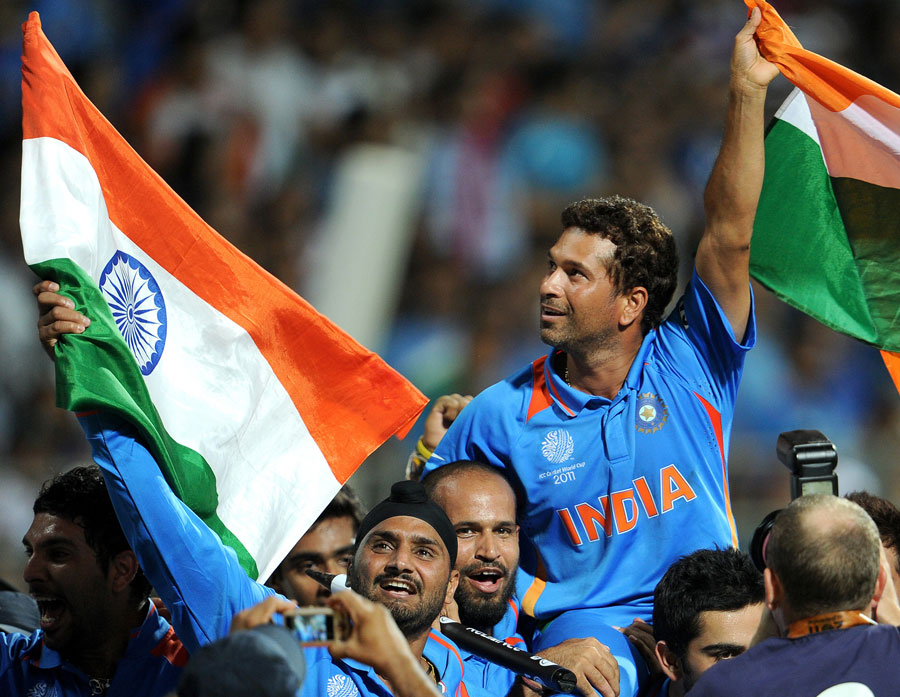
So I thought about writing about this “thought” and I was inspired by the Indian team’s world cup victory yesterday with a billion+ people yelling their hearts out for the Indian cricket team.Its been a long cherished dream and would be with me till my last day : to drive a super sports car to my heart’s content on a race track with the thousands of horses of the super powerful engine beckoning me to take them to the limit. But then Ferrari does not take non-Italians for their factory test drivers, same for Lambhorgini and may be Buggati. Hmmm… nice thoughts but lets get real.

I have thought and compiled a list of “Certified” dream jobs one can take up if they cannot actually catch up with their dreams. I am listing these dream jobs with their perfect examples from here:

1. A super sports start in a game that the country he resides in is mad for. And the perfect example of this is the legend Sachin Tendulkar in Indian cricket.

The advantages of this job are : You are endorsed by the biggest brands and would churn out so much money that you cannot even count in a lifetime. And last but not the least you are the heart throb of a billion hearts and you bring the nation to a stand still when you perform to the content of your heart and whats the best part is that you are playing the sport that you love to.

2. To start something when its virtually non-existent and what you started rocks the world. The best example of such a person is Mr Bill Gates:

The advantages of this job are that: you rake billions and your future generations keep getting money and not only you but they also cannot count the amount of money you have, you are the face that comes to everybody’s mind when they use your creation, you have multiple generations of addicted users of your product and a lot of systems in the world would come to a standstill if your creation suddenly ceases to exist, so your creations is of utmost importance for the world and all this with the product you worked to create.

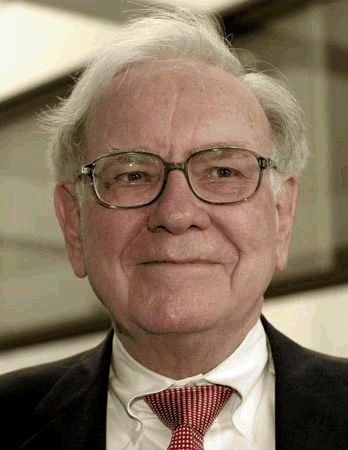
3.  To be a stock broker who invested and pulled out his money just at the right time. The perfect example of this is Mr Warren Buffet:

The advantages of this job are : you earn a fortune, people around the world want to listen to your ideas and ideology, you are a personality whole comments can make stock markets across the world to rise or crash which means you can play around with the money of billions of people out there and all this while you were trying to increase your own bank balance.

4. To be Hugh Hefner:

For those who do not know him: “He is the founder of PlayBoy”. Do I need to explain the advantages of his job? …you got to be kidding me.

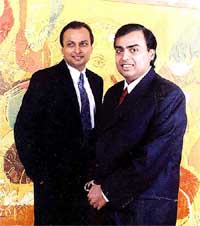
5. To inherit your father’s huge fortune. The perfect example of this is the Ambani brothers:

The advantages of this job are awesome and the best of them all is that you did not have to work your ass off to build a fortune, you got it tailor made and served hot. Your can live your life to the fullest from the beginning, you get a Ferrari’s keys as a gift for your 18th birthday, you have a 30 storey house in some of the most expensive localities of the country and your really do not know how many businesses you have and you thank your dad for blessing you with all his wealth.

6. To be a famous Entertainer and the best example of that is the Indian Super Star : Shahrukh Khan:

The advantages of this job are quite obvious too: you get stardom and attention by the tonnes, get endorsed by almost any brands from a soap to a luxury furnishing brand, charge money for almost anything from your hair to just a 5 min visit to a wedding. You travel around the world for free and people almost do anything just to catch a glimpse of you. But again this is a rare breed of people.

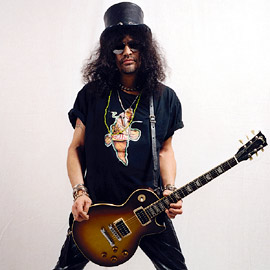
7. To be a famous personality in some thing that has atleast a million followers. The best example of this can be a rock star maybe or a singer:

The advantages of this job are: you pursue your hobby and get money for doing so, you have a lot of “fans” and above all you love what you do and thats the only reason you are doing it.

8. The Final dream job according to me is being a “Yogi: … (lol I don’t mean “Yogi Bear” here… :P) I mean the one who has broken the strands of the material world and is happy in his own spiritual world”

The advantages of this job are : that you do not need anything at all and you are free to do whatever your heart wishes, there is no more a “Dream job” for you.

I have tried to put a lot of “Gyaan” out here and will conclude this post here…. pheww… a lot of thoughts for “My Perfect dream job” , but the stark reality is that more than 99% of us would end their lives doing something that they have not wished or loved all their lives and that is the “Practicality” of the thought. So the solution is to try and love what we do after a large number of repeated attempts do not help us to get into that dream job or do something that we would actually love to do but still may not rake a fortune doing so and finally learn to love other things which you can maybe do 10 years down the line.

Share

“I couldn’t have asked for anything more than this. Winning the World Cup is the proudest moment of my life. Thanks to my team-mates. Without them, nothing would have happened. I couldn’t control my tears of joy.”
Sachin Tendulkar

“I took a quite few decisions tonight, if we hadn’t won I would have been asked quite a few questions: Why no Ashwin, why Sreesanth, why no Yuvraj, why did I bat ahead?! That pushed me and motivated to do well”
MS Dhoni

“All credit goes to Sachin Tendulkar. We played for him. Beating Australia and Pakistan and now this, its a dream come true.”
Gautam Gambhir

“This is unbelievable. The Under-19 World Cup, then the World Twenty20 but this is the most special. For Sachin, for everyone else.”
Yuvraj Singh

“This goes out to all the people of India. This is my first World Cup; I can’t ask for more. Tendulkar has carried the burden of nation for 21 years; It was time we carried him. Chak de India!”
Virat Kohli

“It means the world to me. I have been part of the three World Cups. This is for the nation. Thank you very much, we love you. This cup is for the people. Love you India!”
Harbhajan Singh

 “I can’t explain this feeling. It’s for this special man (tendulkar).”-Zaheer Khan

Share


All of Bombay’s maidans are a stage. Where every cricketer has a role to play. And his seems to be the blockbuster. Ever since he unveiled Act One early last year, audiences have been waiting, a little too eagerly at times, to watch the next scene. Sachin Tendulkar is only, so far, acting in a high-school production. Yet critics have gone to town. And rave reviews have not stopped coming in.

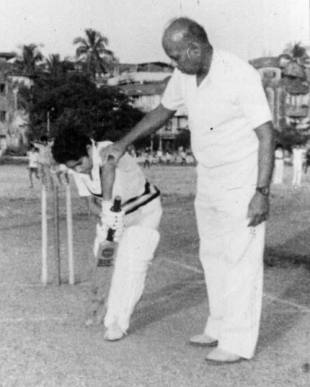
 I guess it can only happen in Bombay. That a schoolboy cricketer sometimes becomes the talk of the town. Why, at the end of every day’s play in the final of Bombay’s Harris Shield (for Under 17s) everybody wanted to know how many he had made. For he does bat three days sometimes! And for all the publicity he has received, Sachin Tendulkar is really still a kid. He only completed 15 on 24 April. And is very shy. Opening out only after you have coaxed him for some time. As his coach Mr Achrekar says, “Aata thoda bolaila laglai” [He’s started talking a bit now]. And it’s then that you realise that his voice has not yet cracked.

His record is awesome. He has scored far more runs than all of us scored looking dreamily out of the window in a boring Social Studies class when we were his age.

 For a prodigy, he started late. When he was nine years old. And it was only in 1984-85 that he scored his first school-level fifty. But 1985-86 was a little better. He scored his first Harris Shield hundred and played for Bombay in the Vijay Merchant (Under-15) tournament. And 1986-87 was when he blossomed. Still only 13, he led his school, Shardashram Vidyamandir, to victory in the Giles Shield (for Under-15s). He scored three centuries – 158*, 156 and 197 – and then in the Harris Shield scored 276, 123 and 150. In all, he scored nine hundreds, including two double hundreds, a total of 2336 runs.

By now everyone had begun to sit up and take notice. The beginning of the 1987-88 season saw Sachin at the Ranji nets. Once again the top players were away playing Tests and perhaps the Bombay selectors felt it wouldn’t be a bad idea to give Sachin first-hand experience of a higher category of cricket. He was named in the 14 for the first couple of games, and manager Sandeep Patil kept sending him out whenever possible – for a glass of water or a change of gloves. All along Sachin probably knew that he was still at best a curiosity, and that while Bombay was giving him every blooding opportunity, he had to prove himself on the maidans.

And that is exactly what he did. Season 1987-88 was a purple patch that never ended. Playing in the Vijay Merchant tournament he scored 130 and 107 and then at the Inter-Zonal stage he made 117 against the champions, East Zone. Then in the Vijay Hazare tournament (for Under-17s) he scored 175 for West Zone against champions East Zone.

 Then came the avalanche. A 178* in the Giles Shield and a sequence in the Harris Shield of 21*, 125, 207*, 329* and 346*! A small matter of 1028 runs in five innings! And in the course of that innings of 329* he set the much talked-about record of 664 for the third wicket with Vinod Kambli, who, it is not always realised, scored 348*. Perhaps the most fascinating of them all was the innings of 346*. Coming immediately, as it did, in the shadow of the world record, a lot of people were curious to see him bat. Sachin ended the first day on 122, batted through the second to finish with 286, and when the innings closed around lunch on the third day, he was 346*. And then came back to bowl the first ball. In April’s Bombay summer.

But when did this story begin? Like all children, Tendulkar took to playing “galli” cricket. His brother Ajit was a good player and persuaded Mr Achrekar, probably Bombay’s most famous coach, to look at him. Achrekar recalls, “When he first came to my net four-five years ago, he looked just like any other boy and I didn’t take him seriously. Then one day I saw him bat in an adjacent net. He was trying to hit every ball but I noted that he was middling all of them. Some time later he got a fifty and a friend of mine, who was umpiring that game, came and told me that this boy would play for India. I laughed at him and said that there were so many boys like him in my net. But he insisted. ‘Mark my words, he will play for India.’ My friend is dead now but I’m waiting to see if his prophecy comes true.’

Tendulkar is taking first steps towards getting there. He discovered that his house, being in Bandra, would not allow him to be at Shivaji Park whenever he wanted. He now spends most of his time at his uncle’s house, just off this nursery of Bombay cricket. When he is not actually playing, that is.

 Quite often, he is playing all day; important because it has helped him build the stamina to play long innings. “I don’t get tired,” he says, referring to them. “If you practise every day, you get used to it.”

And what about that world-record innings? “I could bat very freely then because my partner Vinod Kambli was batting so well that I knew that even if I failed, he would get enough runs for the side.”

Isn’t there a lot of pressure on him now? Everyone assumes he will get a big score? “Only in the beginning. Till I get set. Once I get set, I don’t think of anything.”

Wasn’t he thrilled at being invited to the Ranji nets? “Definitely. After playing there I got a lot of confidence.”

 Everything in Tendulkar’s life has so far revolved around cricket. Including his choice of school. A few years back he shifted to Shardashram Vidyamandir, only so that he could come under the eye of Achrekar. “It helped me tremendously because ‘sir’s’ guidance is so good,” he says.

Strangely his parents were never very keen about cricket. His brother Ajit says, “They were not very interested in the game, though they gave him all the encouragement. You see, in our colony all parents were training their children to be engineers and doctors. And they would say, “Gallit khelun cricketer hoto kai?” [You don’t become a cricketer by playing in the alleys]. I am so happy he is doing well because now people think he is doing something.”

The question that arises then, given all the publicity is: Just how good is Sachin Tendulkar?

“For his age, unbelievable,” says Sharad Kotnis, Bombay’s veteran cricket watcher. “He is definitely comparable to Ashok Mankad, who had a similar run many years ago. But remember Ashok had cricket running in his family and his father often came to see him play. I think Tendulkar’s strongest point is that he is willing to work very hard.”

Luckily for Sachin, there is a calming influence over him, just so he doesn’t get carried away by this acclaim. His coach Achrekar knows exactly what he is talking about. “He is not perfect yet. Far from it. In fact, I would say he is not even halfway there. He still has a lot of faults, particularly while driving through the on, which is an indicator of a class batsman. He still has a long way to go, but what I like about him is his ability to work hard. I don’t think we should get carried away by his scores. After all, one has to take into account the nature of the wicket and the quality of the bowlers. By his standards the quality of the bowling he faced was not good enough.

“His real test will come this year when he plays in the ‘A’ Division of the Kanga League. [Sachin will play for the Cricket Club of India, which for him has waived the stipulation that children under 18 are not allowed inside the Club House!] He should get 70s and 80s there and not just 20s and 30s; particularly towards the end of the season, when the wickets get better.”

Achrekar, in fact, is quite upset about the publicity Sachin is getting. “People don’t realise that he is just 15. They keep calling him for some felicitation or the other. The other day he was asked to inaugurate a children’s library. This is ridiculous. These things are bound to go to his head. He will start thinking he has achieved everything. I hope all this stops so he can concentrate and work hard.”

Yet both Achrekar and Kotnis agree on when they think Sachin will become a Ranji regular. “I think he should be playing the Ranji Trophy next year. I think it is unfair to compare him to the [Lalchand] Rajputs and [Alan] Sippys yet, but I think he should play next year,” feels Kotnis. And Achrekar adds, “Inspite of what I said about him, if he maintains this kind of progress, he should play the Ranji next year.”

Clearly the curtain call is still a long way off for Sachin Tendulkar. He has a lot of things going for him. Most importantly he is in Bombay, where the sheer atmosphere can propel him ahead. In how many cities would a 15-year-old be presented a Gunn and Moore by the Indian captain? And in which other city would the world’s highest run-getter write to a 15-year-old asking him not to get disheartened at not getting the Best Junior Cricketer award?

Sunil Gavaskar wrote to Tendulkar to tell him that several years earlier another youngster too had not got the award and that he didn’t do too badly in Test cricket. For him the letter from his hero is a prized possession. Another great moment was a meeting with him where “… he told me that I should forget the past every time I go to bat. I should always remember that I have to score runs each time.”

 He is in the right company. And the right environment. The next few years will show whether he has it in him the mental toughness to overcome the over-exposure. If it does not go to his head, surely there is a great future beckoning. This is really just the beginning and I will be watching this little star with avid interest for the next three years.

If he is still charting blockbusters, I’d love to do another review then.

Share

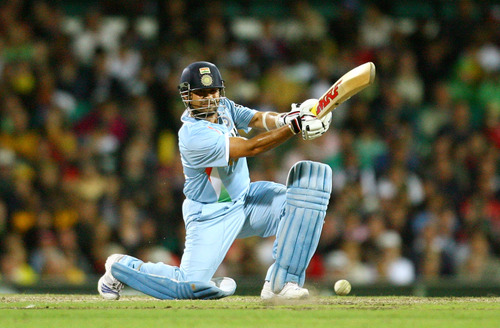
Sachin Tendulkar may have inspired others to write poetry but he batted in robust prose. Not for him the tenderness and fragility of the poet, the excitement of a leaf fluttering in a gentle breeze. No. Tendulkar is about a plantation standing up to the typhoon, the skyscraper that stands tall, the cannon that booms. Solid. Robust. Focused. The last word is the key. He loves the game deeply but without the eccentricities of the romantic. There is a match to be won at all times.

But Tendulkar too was a sapling once. And his brother Ajit sheltered him from the gale, kept him focused. Sachin looked after his cricket, Ajit looked after Sachin. Twenty-two years ago, I was asked by Sportsworld to do an article on this extraordinary schoolboy. It wasn’t Sachin I had to speak to, it was Ajit. When the time for the interview came, at Ramakant Achrekar’s net in Shivaji Park, Ajit was there with a cyclostyled copy of Sachin’s scores. And Achrekar admonished me for spoiling his child, for fear that Sachin would get distracted.

The interview was done. Sachin was neither overwhelmed nor garrulous; indeed he was so limited with his words that you had to hold on to every one of them. It was sent to Sportsworld in Calcutta by courier (or was it just put into a normal post box?) and then came a request for two photographs. Again it was Ajit who produced them. When I got the cheque, I noticed they had paid me an extra 100 rupees for the photographs. They weren’t mine but Sportsworld had a policy of paying for them and so I wrote out a cheque to Ajit for Rs 100. It was acknowledged and accepted gratefully. We lived in different times then!

It was also my first realisation that young men in the public eye needed to be sheltered so they could focus on playing cricket; that they needed an elder brother, or an equivalent, to put a gentle hand on the shoulder and, occasionally, lay one the back side. A lot of other young men today see Tendulkar’s runs, eye his wealth, but their brattishness comes in the way of noticing his work ethic. For Tendulkar’s life is not the story of extraordinary ability but of an extraordinary work ethic.

Twelve years later, on a cold evening in Bristol, preparing for a World Cup game against Kenya the next day, I saw him in dark glasses, fiddling around with his kit. Aimlessly, like he was searching for something to do. At most times he would be bounding around with energy, bowling off 18 yards, taking catches, shouting thoughts to other batsmen.

I approached him hesitantly, I couldn’t see his eyes because they were shrouded by these huge dark glasses, probably the only time they were used to cover rather than to adorn, for he had just lost his father. I asked him if he would talk to us about coming back to play. He nodded his head and only briefly took the glasses off. His eyes were red and swollen; you could see he had been crying copiously. For the interview he put them on, and once the camera had stopped rolling, admitted he didn’t want to return, that his mind was all over the place, that he felt anchorless. It was the only time he didn’t want to play for India but he had been forced back by his family, aware that only cricket could help him overcome his grief. When he got a hundred the next day and looked heavenwards, some other eyes were moist. Even in his grief there was resolve, for he wanted that century. It might only have been Kenya but he was battling himself, not the bowlers.

Four years later he agreed to do an interview for a series of programmes I was then doing. Our producer thought we would make it special, and to our surprise and joy, Amitabh Bachchan agreed to introduce the programme. In the first break Sachin whispered, “That was a beautiful surprise.” Little did he know there was more to come.

 Sometime earlier he had told me he was a big fan of Mark Knopfler and we thought it would be great if we could get the great Dire Straits man to talk to us.

“I’m recording all night but immediately after that, before I fall asleep,” Knopfler said, and somehow we persuaded Sachin to do the programme in the afternoon rather than in the morning. And when the moment came, we patched the line on and when I said, “Hello Mark,” Sachin looked puzzled. A minute later his eyes lit up when he realised which Mark we had on the line. And then he was like a child, tongue-tied, fidgety, excited – much like most people are when they first meet Tendulkar. Even the stars can get starry-eyed!

And there have been moments of surprising candour. When asked, as batsmen tend to be, which bowlers had troubled him the most, he smiled an almost embarrassed smile and said, “You won’t believe this.” When probed, he said, “Pedro Collins and Hansie Cronje.”

“In fact,” he said, “I once told my partner ‘Will you please take Hansie for me? I don’t mind playing Allan Donald'”

Tendulkar’s batting has been much chronicled over the years. Indeed, I believe he has been the most analysed cricketer in the history of the game. Yet he has found the urge, and indeed the solutions, to play on for 20 years. Now that is a landmark to be celebrated, not the many inconsequential others that we exploit for our own need. It has been fantastic having a ringside view of this journey, watching a cricketer, and a person, grow. But one thing hasn’t changed. He still approaches every game like a child would a bar of chocolate, feeling happy and fortunate.

Share